A gray deck is not a dead deck. Most of what you are looking at is a thin oxidised surface layer and mildew — and both come off.
📞 Call or Text (804) 571-7226 Get a Free Quote Most quotes go out the same day.
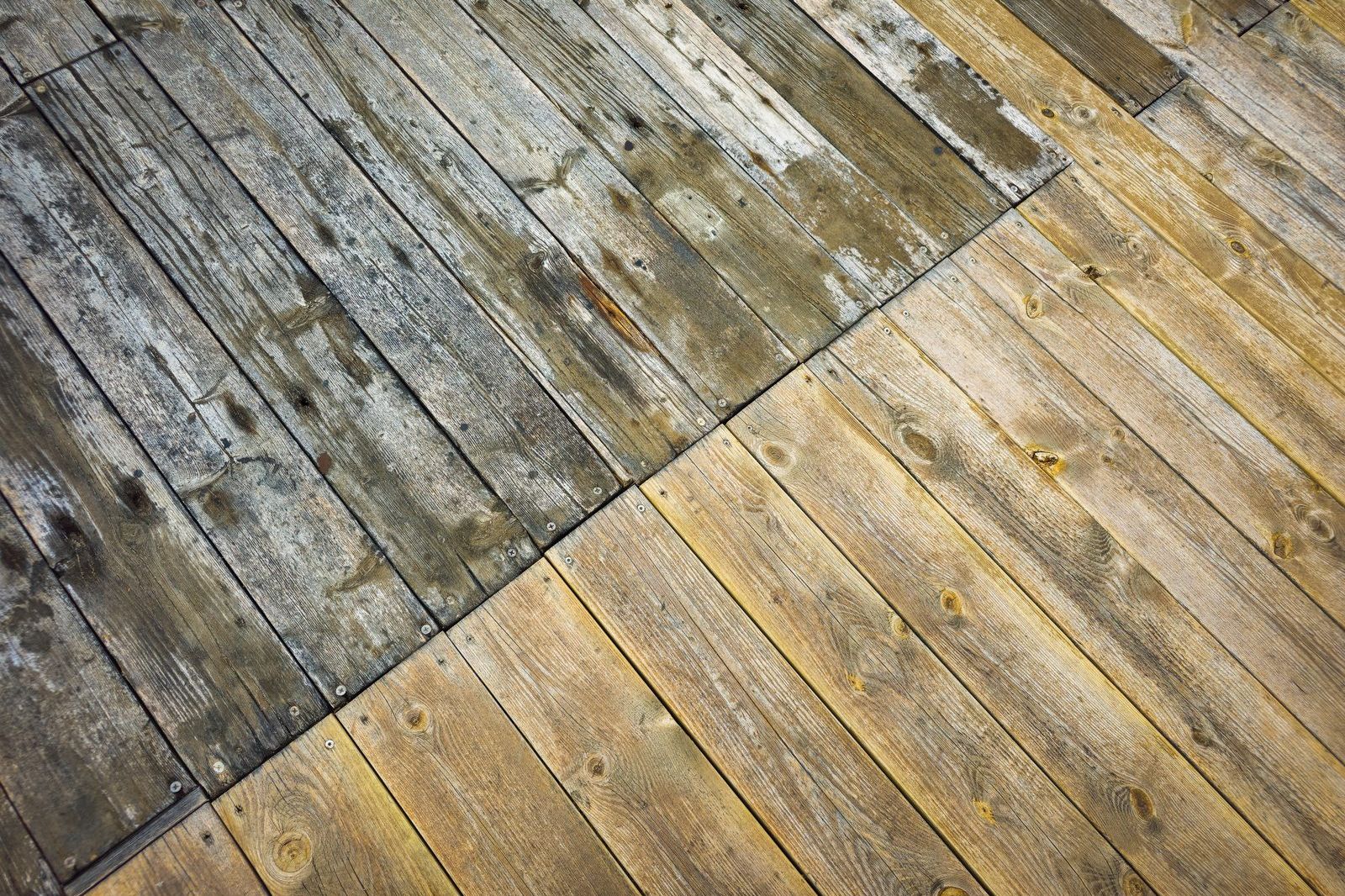
A gray deck is not a dead deck
Sunlight breaks down the surface cellulose of exposed wood, and Richmond humidity grows mildew in the grain. Together they read as uniform gray. Cleaning removes both and returns the wood to something close to its original tone.
What cleaning cannot fix is physical damage: splintering, cupping, cracked boards, and deep gouges. Those need sanding or replacement, and we will tell you which you are looking at before we quote rather than after.
Wood vs. composite
Different pressures, different chemistry. The fuzzed, furry, over-pressured deck is the single most common DIY casualty in this trade — once wood fibers are torn open they stay open, and the deck absorbs water faster forever after.
We avoid it with wide fan tips, controlled standoff distance, and sodium percarbonate wood cleaners that do the lifting chemically. Composite gets lower pressure again and a cleaner formulated not to haze the cap layer.
Stain prep
Cleaning is only half of a proper stain prep. After washing we brighten with an oxalic acid solution, which neutralises the cleaner, reopens the grain and evens out the tone so stain absorbs uniformly instead of blotching.
Then the wood needs to dry. Forty-eight hours minimum in good weather, longer in Richmond humidity. Staining a deck that is still damp underneath is how a $600 stain job fails in eighteen months.
Fences
The shaded side of a pine privacy fence always goes green first — often dramatically, so that one face looks a completely different color from the other. Clay splash collects along the bottom rail. Both clean up well. We wash fences to keep, and we wash fences to prepare for stain; the process differs slightly between the two, so tell us which you are doing.
The 5-Step Deck and Fence Wash
- 1. Test a section first. Wood species, age, and whatever finish is left on it all change the approach. We find a low-visibility board and prove the settings there before touching the rest.
- 2. Protect the surroundings. Beds, lawn, and anything under a raised deck get soaked and covered. Runoff from a deck goes somewhere, and we would rather it be somewhere harmless.
- 3. Apply a wood-safe cleaner. A percarbonate-based cleaner lifts the gray and kills mildew without the fiber damage bleach causes on bare wood. It dwells while it works.
- 4. Rinse at controlled pressure with a fan tip. Wide fan, consistent distance, moving with the grain. This is where deck jobs are won or lost — a stationary nozzle for two seconds leaves a mark you will see for years.
- 5. Neutralize and inspect. A final rinse brings the pH back down so any future stain bonds properly, then we walk it with you and flag loose boards, popped nails, and soft spots.
Signs your deck is ready
- Uniform silver-gray across the boards. That is UV-degraded surface fiber, not rot, and it washes off.
- Black spotting, worst under the rail and in shaded corners. Mildew, which needs a cleaner rather than pressure.
- Green film on the north side of fence pickets. Algae, the same growth that shows up on siding.
- Water soaking straight in instead of beading. The old sealer is gone and the wood is drinking. Wash and re-seal before a winter passes.
- A slick, slightly slimy feel when wet. Algae film, and a genuine slip risk on stairs.
- Composite boards looking chalky or blotchy. Surface film, not fading, and it comes off with the right cleaner.
Why Richmond wood weathers the way it does
Almost every deck built here since the eighties is pressure-treated southern yellow pine, and it is a thirsty, open-grained wood. It takes on water fast, dries slowly under our summer humidity, and moves a lot through the freeze-thaw cycles we get from December to February. That movement opens the grain a little more each year, which gives mildew somewhere to sit.
Shade does the rest. The tree canopy across Henrico and Chesterfield keeps most backyard decks damp well into the morning, and a deck that never fully dries never stops growing things. Spring pollen adds a bonded yellow film on top of all of it, which is why so many people first notice their deck looks wrong in April.
What deck and fence cleaning costs in Richmond
Most decks fall between $200 and $450. Fences are usually quoted by linear foot, and most residential runs land between $150 and $400. What moves it:
Figures on this page are typical for Richmond-area properties and are given as a guide, not a quote. Your firm price comes once we have seen the property.
- Square footage or linear footage — the obvious one, and the biggest single factor.
- Rails, balusters, and lattice — detail work takes longer per square foot than open decking by a wide margin.
- How much finish is left — patchy failing stain is slower than either bare wood or an intact finish.
- Multi-level or elevated decks — more edges, more protection work underneath.
- Stain prep — if you are staining afterward, the prep standard is higher and the job takes longer.
All published numbers are on the Richmond pricing page.
What we will not do
- We will not strip solid stain with a pressure washer. That is a chemical stripping job, and doing it with pressure destroys the wood surface.
- We will not sand or refinish. We clean and prep. Staining is someone else’s trade and we will say so.
- We will not repair structure. We flag soft boards, loose rails and rot. We do not fix them.
- We will not promise a gray deck comes back to new. Deeply weathered or previously furred wood improves a great deal but keeps some character.
Related reading
For why wood and siding need chemistry rather than force, see soft washing vs pressure washing.
Common questions
What pressure do you use on cedar?
Far less than most people expect. Soft woods like cedar and pine are cleaned chemically and rinsed with a wide fan tip held well back. If a crew is holding a narrow nozzle close to cedar, you will see the marks for the life of the deck.
How long after cleaning before I can stain?
Give it 48 hours of dry weather, longer if it has been humid. Wood that looks dry on the surface can still be holding moisture in the grain, and stain applied over that will not bond. A moisture meter is the reliable check.
Does cleaning scratch composite decking?
Not when it is done properly. Composite gets a cleaner and a low-pressure rinse. The damage you see on composite decks almost always comes from someone attacking a stain with a turbo nozzle.
Will the mildew be back next year?
Some will, especially on shaded decks. A sealed deck holds off far longer than a bare one, which is the real argument for staining after a wash rather than leaving it.
Can you clean a deck with furniture and a grill on it?
Move what you can and we will work around the rest. Anything left on the deck has to be shifted at least once during the job, and we would rather you decide what gets moved than us.
What about the boards under a hot tub?
We clean up to the edge. What is underneath is inaccessible without moving the tub, which we do not do. It is worth knowing that this is usually the wettest wood on the deck.
Do you clean vinyl and aluminum fencing?
Yes, and it is straightforward — the same soft wash approach used on siding. Vinyl fence panels in newer Chesterfield and Short Pump neighborhoods clean up very well.
My fence is shared with a neighbor. Do you do both sides?
We clean whichever side you are paying for, and we need access. If your neighbor wants the other side done at the same time it is cheaper for both of you, but that conversation is yours to have.
Will cleaning remove the green stamp marks on pressure-treated wood?
No. Those are mill marks and treatment stamps in the wood itself. Cleaning lightens them but they do not come out.
Is it worth cleaning a deck I am planning to replace?
Usually not, and we will tell you if we think that is the situation. If boards are soft or the framing is questionable, cleaning is money spent on something that is coming out.
📞 Call or Text (804) 571-7226 Get a Free Quote Most quotes go out the same day.