The green film on the side of your house is not dirt. It is alive, it is growing, and that is why rinsing it off with a garden hose buys you about eight weeks before it comes back looking exactly the same.
We soft wash houses across the Richmond metro — vinyl, Hardie, aluminum, painted wood and brick veneer — using a detergent that kills the growth at the root and a pressure low enough that it cannot damage anything.
📞 Call or Text (804) 571-7226 Get a Free Quote Most quotes go out the same day.
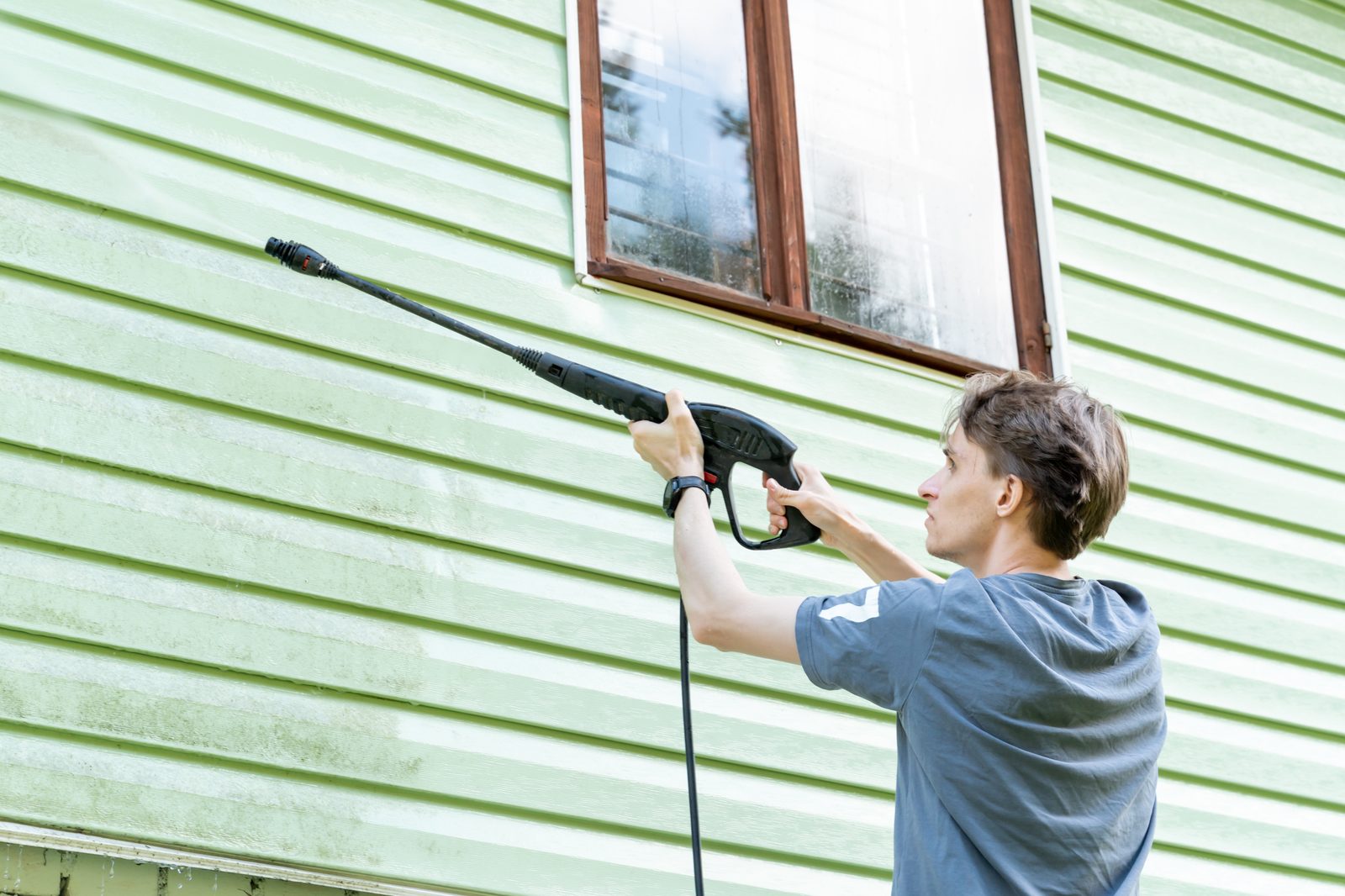
That green film is alive
What is growing on your siding is usually a mix of algae, mildew and mold, and Richmond summers are close to ideal for all three. They need warmth, moisture and shade, and a humid city in the bend of the James supplies all three from May through September.
Which is why it always starts on the same walls. North and northeast elevations get the least direct sun, stay damp longest after a storm, and go green first — often while the sunny side of the same house still looks fine. Add a mature oak or a tight lot line and the shade never breaks at all.
Here is the part most homeowners do not realize: pressure alone removes the stain, not the organism. Blast it off with a rented machine and you have cleared the visible layer while leaving the living root structure in the pores of the siding. It regrows from there, and fast. Killing it is a chemistry problem, not a force problem.
Why we soft wash, and why we will not blast your siding
| Method | Pressure |
|---|---|
| Garden hose | ~60 PSI |
| Our soft wash | under 500 PSI |
| Rented big-box machine | 2,400–3,300 PSI |
Figures on this page are typical for Richmond-area properties and are given as a guide, not a quote. Your firm price comes once we have seen the property.
That rental figure is five to six times what siding should ever see. At that pressure you can crack vinyl panels outright, blow water up behind the J-channel and around window flashing, strip paint off wood, chew the surface off Hardie board, and cut mortar out of a brick veneer joint.
Soft washing inverts the approach. The detergent does the work — a diluted sodium hypochlorite solution with a surfactant that clings long enough to kill the growth — and low-pressure water simply carries the dead material away. Cleaner result, no damage, and it stays clean substantially longer because the organism is actually dead.
Surfaces we wash
- Vinyl siding — the most common in Richmond’s post-1970 suburbs and the most straightforward to soft wash.
- Hardie and fiber cement — very common in newer Henrico and Chesterfield construction. Cleans beautifully at low pressure; the painted finish is easily damaged at high pressure.
- Aluminum siding — fine to wash, but see the oxidation note below.
- Painted wood — older homes and trim throughout. We check paint adhesion before we start.
- Brick veneer — the modern brick on ranches and colonials from the 1950s on.
- Stucco and EIFS — washable with care. These systems are unforgiving about water intrusion, so pressure stays at the very bottom of the range.
One honest warning about oxidation. Older vinyl and aluminum siding often develops a chalky, faded surface. That is the pigment breaking down — paint failure, not dirt — and no amount of washing brings the color back. What washing does is remove the growth and grime on top of it, which usually improves things noticeably but will not make the siding look new. We identify oxidation before we wash and tell you what to expect, because finding out afterward feels like being sold something that did not work.
What a house wash includes
- All exterior walls, top to bottom
- Soffits and fascia
- Porch ceilings, columns and railings
- Garage doors
- Exterior light fixtures and shutters
- The foundation splash line, where clay collects
- A clean-water rinse on every window we touched
Not included: roof cleaning, which is a different method entirely, and any masonry that needs a historic-appropriate approach.
Richmond’s pollen problem, and when to book
Oak and tulip poplar pollen runs from late March through April here, and it does not behave like dust. It bonds to porch ceilings, window screens, railings and outdoor furniture in a yellow film that a hose barely touches.
Practical advice: book your house wash after the main drop, generally late April into May. Wash in March and you will be looking at a fresh yellow coat within a fortnight.
How we protect your property
Before any detergent is mixed, landscaping within reach gets soaked down — wet foliage does not absorb — and anything delicate gets covered. Outlets, fixtures and AC units are bagged. We work top-down so nothing dries with detergent on it, and every surface gets a final clean-water rinse, including the beds and lawn at the base of each wall.
The Richmond 7-Point Soft Wash
Every house we wash gets the same seven steps in the same order. None of it is complicated. Skipping any one of them is how siding ends up streaked, how foundation plantings get burned, and how the growth is back on the shaded wall before the next spring.
- 1. Walk the house with you. Siding type, paint adhesion, oxidation, artillery fungus, window seals, and where the growth is genuinely worst. You get the honest read, including anything we cannot fix.
- 2. Soak the beds and lawn. Wet foliage does not absorb. Everything inside the splash zone gets a plain-water soak before any mix leaves the hose.
- 3. Cover and bag. Outlets, exterior fixtures, AC condensers, and anything else that should not take a drenching.
- 4. Apply top-down at low pressure. The detergent does the work, not the water. Pressure at the wall stays in the range a garden hose reaches.
- 5. Let it dwell. The mix needs several minutes on the surface to kill growth at the root. This is the step most people skip, and it is the reason a cheap wash looks fine for eight weeks and then does not.
- 6. Rinse top-down. Nothing dries with detergent on it. We work the same direction we applied so no section sits too long.
- 7. Rinse everything else. Beds, lawn, walkways, windows, and the driveway apron. The job is not finished when the wall is clean.
Signs your siding is overdue
Most Richmond homeowners call us when the house has already looked wrong for a season. These are the things worth watching for earlier.
- Green film that shows on the north and shaded walls first. Growth follows shade and moisture. If one elevation looks noticeably worse than the others, that is the pattern.
- Dark vertical streaks under the gutter line. Runoff carrying roof and gutter debris down the wall. It rarely rinses off with water alone.
- A gray haze that comes off on your hand. Surface grime and pollen bound into a film. Common here from late March onward.
- Tiny black specks on siding and window glass. Artillery fungus, thrown from hardwood mulch. Worth catching early — the longer it sits, the more of it becomes permanent.
- A musty smell along shaded walls. Usually mildew in the siding seams rather than anything inside the wall.
- Mud daubers and wasps returning to the same corners. They favor sheltered, dirty surfaces. A wash removes the nesting residue they navigate back to.
What a house wash costs in Richmond
Most single-story homes in the metro land between $250 and $400. Two-story homes typically run $350 to $550. Larger or heavily overgrown houses go above that, and we will tell you before we start, not after. Five things move the number:
- Footprint and story count — more wall, more time, and second and third stories need different reach.
- How much growth is actually on the wall — a light seasonal film and four years of established algae are not the same job.
- Access — tight side yards, steep grade, fencing, and mature foundation plantings all slow the work down.
- Siding condition — chalky, oxidized, or failing paint means more care and a slower pass.
- Add-ons — gutter face brightening, walkways, or a driveway done on the same visit cost less bundled than booked separately.
Every number we publish is on the Richmond pricing page. If you want to understand why we soft wash siding instead of pressure washing it, that is covered in soft washing vs pressure washing.
What we will not do
A short list, because knowing what a contractor refuses to do tells you more than a list of what they offer.
- We will not pressure wash vinyl or Hardie. High pressure drives water behind the siding and leaves lap marks. There is no version of that we are willing to sell.
- We will not promise to restore oxidized siding. Washing removes what is on top of the chalking. It does not reverse it.
- We will not wash failing paint. If paint is already lifting, washing accelerates it. We will show you where and stop there.
- We will not guarantee full artillery fungus removal. We get most of it on most houses. The deeply embedded specks sometimes will not come off at any pressure that is safe for your siding.
Related reading
Wondering why the green keeps returning? Green algae on siding in Richmond explains what is actually growing there. And soft washing vs pressure washing covers why the method matters more than the price.
Common questions
Will soft washing kill my plants?
No. The beds get soaked with plain water before we start, wet foliage does not absorb the mix, and everything gets rinsed again at the end. Plant damage from soft washing comes from skipping the pre-soak, not from the detergent itself.
Do I need to be home?
Only for the walkaround at the start if you want one, and most people do. After that you are free to leave. We need access to an outside spigot and to the gates on both sides of the house.
What happens if it rains that day?
Light rain after the rinse is harmless and can even help. Rain during application is not, so we reschedule. You will hear from us that morning rather than finding out when we do not show up.
Will this fix my chalky, faded siding?
No, and anyone who says otherwise is selling you something. Chalking is the pigment breaking down in the vinyl or paint. Washing removes the growth and grime sitting on top of it, which usually looks like a real improvement, but the underlying fade stays.
Can you reach a three-story house?
Yes. Soft washing is done from the ground with an application setup that reaches high walls without a ladder against your gutters. Older three-story homes in the Fan and Church Hill are routine for us.
How is this different from someone with a pressure washer?
Pressure removes what is on the surface. Soft washing kills what is growing in it. That is why a pressure-washed house looks clean for a couple of months and a soft-washed house holds for a year or more, and why we never point high pressure at siding.
Do you clean the windows too?
Exteriors get rinsed as part of the wash, and they come out substantially cleaner. That is not the same as a proper window cleaning with a squeegee and a detail of the frames, which we do not do.
How far out are you booking?
Usually within the same week outside of spring. March through May is our heaviest stretch and can run longer. Quotes go out the same day either way.
Is the detergent safe around pets?
Keep pets inside during the wash and off the treated surfaces until everything has dried, which is typically an hour or two. After that the rinsed surfaces are fine.
What if a section still looks wrong when you are done?
Tell us before we leave and we re-clean it on the spot. If you spot something after, call within a week and we come back. That is the whole guarantee, and there is nothing else attached to it.
📞 Call or Text (804) 571-7226 Get a Free Quote Most quotes go out the same day.